
Paintless Dent Repair
RESTORE THE METAL.KEEP THE PAINT.
Paintless Dent Repair is a precision technique for removing qualifying dents without repainting — preserving your vehicle's factory finish when the damage allows.
What Is PDR?
THE METAL ISTHE POINT OF REPAIR
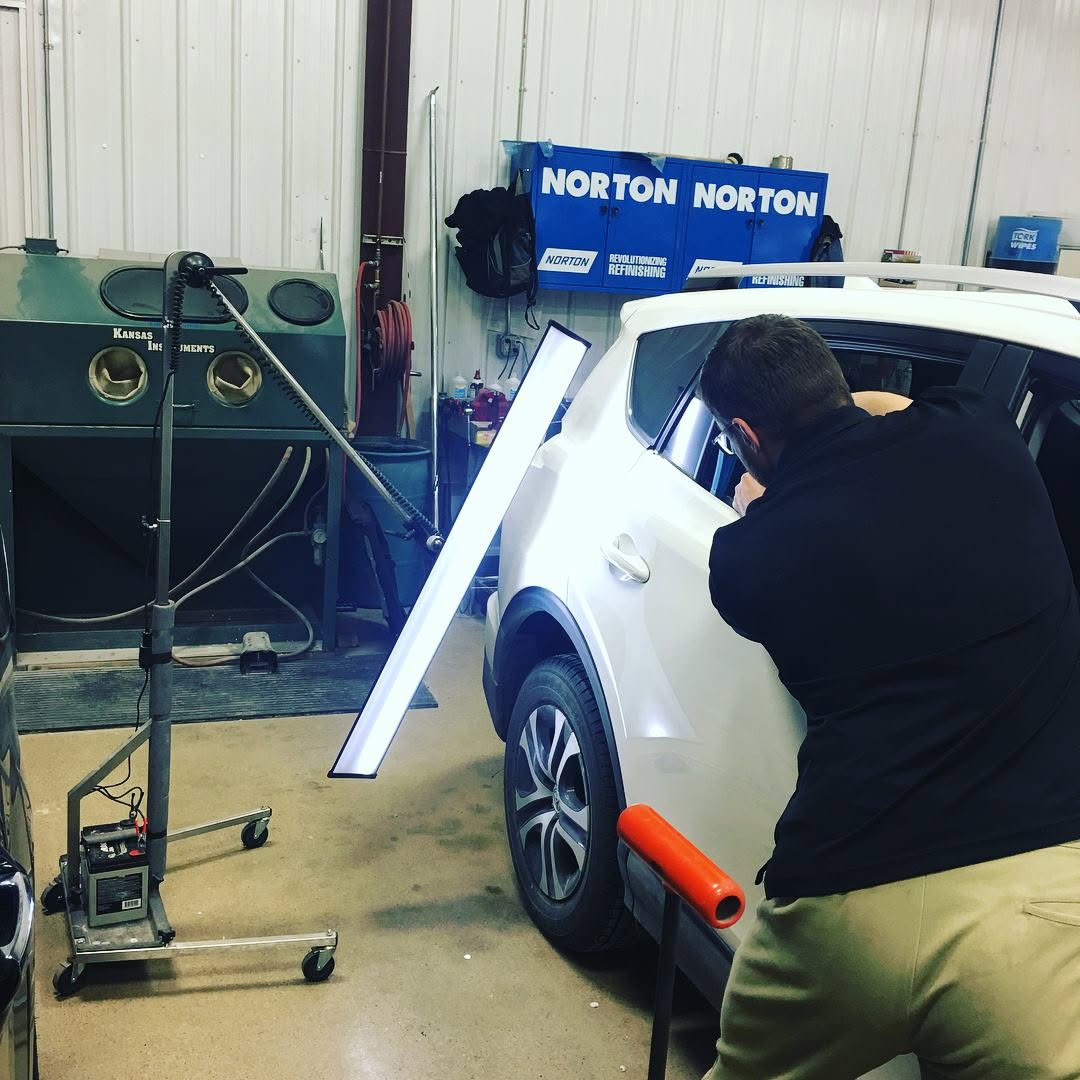
Paintless Dent Repair is a technique for removing qualifying dents from vehicle panels by carefully manipulating the metal back toward its original shape — without sanding, filling, or repainting.
A technician works from behind the affected panel using specialized tools, using a reflection board to read the distortion in the metal surface and address each dent with precision.
The result, when damage qualifies, is a restored panel with the factory paint surface intact — no color-match concerns, no body filler, no repaint.
The PDR Process
HOW PDR WORKS
01
Evaluate
The technician inspects the damage — dent depth, paint condition, panel accessibility, and severity — to determine whether PDR is appropriate.
02
Read the Metal
A reflection board projects parallel lines across the panel surface. The technician reads the distortion patterns to map each dent precisely.
03
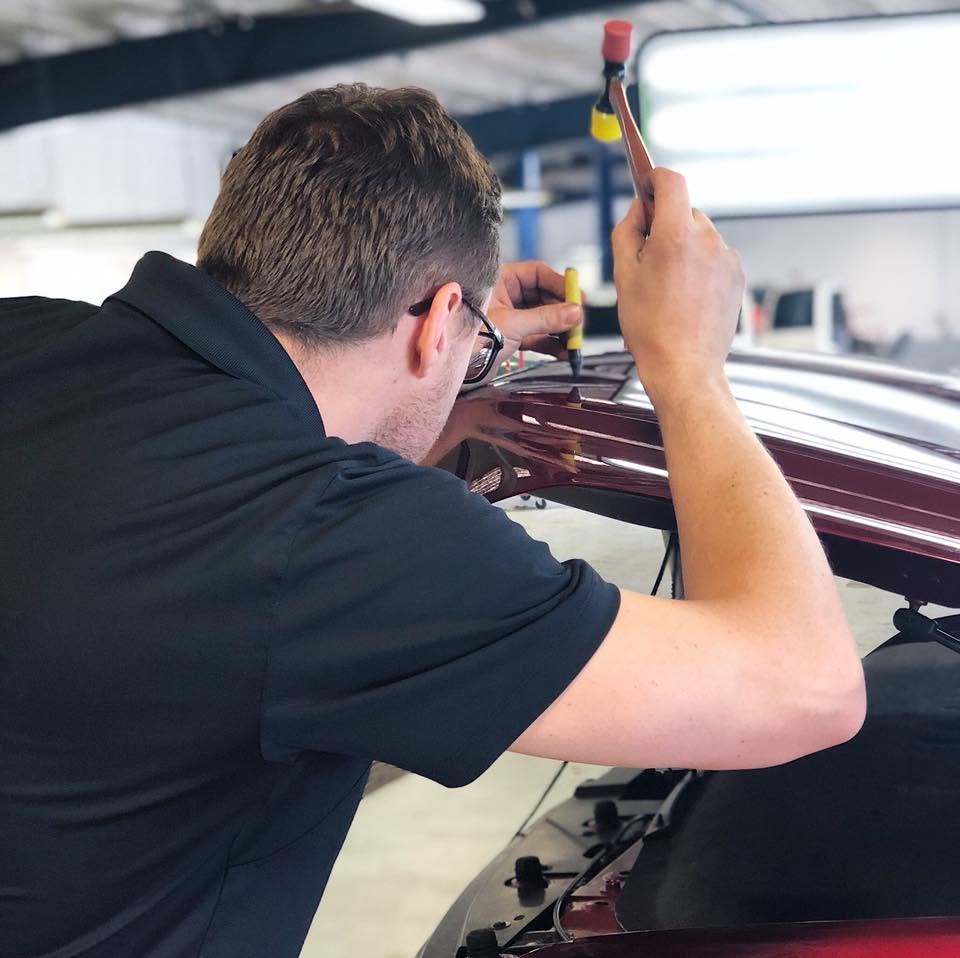
Work the Metal
Using PDR tools from behind the panel, the technician carefully manipulates the metal back toward its original contour — without touching the paint.
04
Verify and Finish
The reflection board is used again to confirm the repair. The factory paint surface is maintained throughout qualifying repairs.
Why PDR
ADVANTAGES OF PDRFOR QUALIFYING DAMAGE
Preserves Factory Paint
No repainting means no color-match concerns and retained OEM finish.
No Body Filler
PDR restores the metal itself — no fillers or compounds on qualifying repairs.
No Repainting Required
For qualifying damage, the original paint surface is maintained throughout.
Precise Repair
Technicians use reflected light to read and address each distortion individually.
Efficient Process
PDR typically requires less time than conventional body repair for qualifying damage.
PDR vs. Conventional Repair
KNOWING WHEN PDR IS
THE RIGHT CHOICE
PDR is appropriate only for qualifying damage where paint is intact and damage depth allows. A professional evaluation determines the right approach.
PDR Has Limits
NOT ALL DENTS QUALIFY FOR PDR
PDR is a precision technique with a defined scope. Dents where the paint has cracked or chipped, dents that are too deep or too severe, damage along sharp body lines, and areas not accessible to PDR tools may all require conventional body repair. A professional evaluation determines what qualifies.
Schedule an EvaluationCommon Questions
PDR QUESTIONS ANSWERED
From Our Customers
COLLISION CENTERS ON WORKING WITH DENT FORCE
“Peter Dikun has done PDR work for my shop many times. He always does quality work and completes the jobs in a professional and timely manner. I highly recommend Dent Force for any PDR needs.”
Gary Veeder
Owner—Veeders Collision Center, Inc.
“Peter has done PDR work for us on multiple occasions. He is very professional, efficient and does great work. His attention to detail is outstanding and he is very knowledgeable about the PDR process. I would highly recommend Dent Force for any PDR needs.”
Joshua Jones
Collision Center Manager
“Peter at Dent Force is a true professional. He does quality PDR work and is very easy to work with. We have used him for both hail damage and individual dent repairs and he always delivers great results. I would definitely recommend Dent Force.”
Kirby Gardner
Manager—Auto Body Solutions
Get Started
TALK WITH A PDR SPECIALIST
Contact Dent Force for a professional evaluation. We will assess your damage and give you an honest picture of whether PDR is appropriate.